AI in Everyday Life: Recent News and Noteworthy Innovations
Artificial Intelligence (AI) has become an integral part of our daily lives, often operating behind the scenes to make our interactions with technology more seamless and intuitive. From virtual assistants to predictive algorithms, AI is transforming how we live, work, and play. This article delves into recent advancements in AI technology and its applications in everyday life, highlighting noteworthy innovations that have made headlines.
The Growing Influence of AI in Daily Life
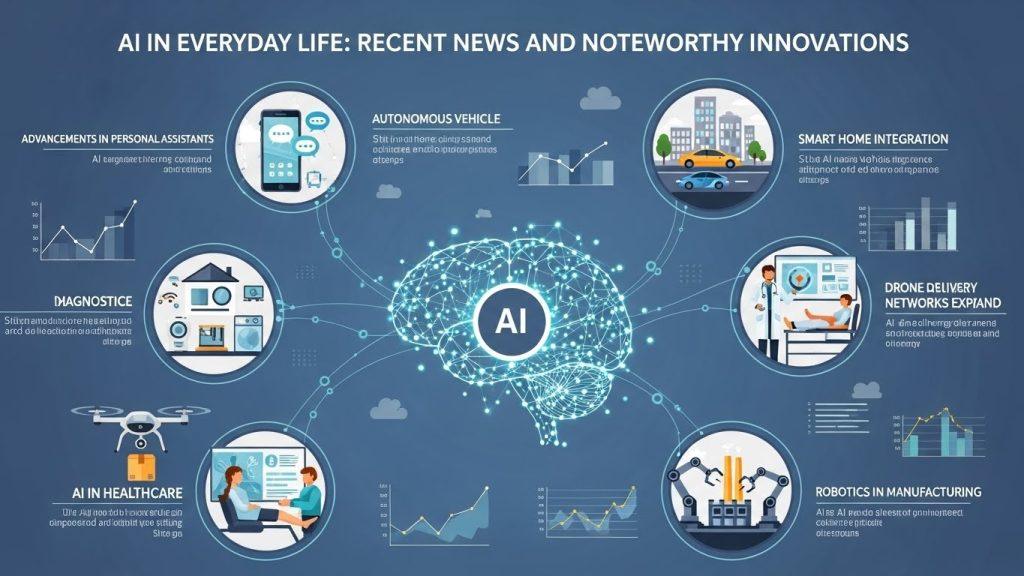
AI’s influence extends beyond tech-savvy individuals and has permeated various aspects of everyday life. One of the most prominent examples is the use of AI-powered virtual assistants like Amazon’s Alexa, Apple’s Siri, and Google Assistant. These tools help users manage their schedules, control smart home devices, and search for information using natural language processing.
Moreover, AI is revolutionizing customer service with chatbots that provide 24/7 assistance, offering solutions and handling inquiries without human intervention. These systems leverage machine learning to improve their responses over time, enhancing user satisfaction and efficiency.
Recent News: Breakthroughs in AI Technology
The field of AI is rapidly evolving, with researchers and companies making significant strides in developing more sophisticated systems. One recent breakthrough is the development of AI models capable of understanding context and delivering more nuanced interactions. These advancements are paving the way for AI systems that can better understand and emulate human emotions, improving their ability to interact naturally with people.
Another area of progress is AI’s role in healthcare, where it assists in diagnosing diseases, personalizing treatment plans, and even predicting patient outcomes. AI algorithms can analyze vast datasets of medical records to identify patterns and correlations that might escape human observation.
AI in Transportation: Enhancing Safety and Efficiency

The transportation sector has been a significant beneficiary of AI technology, with innovations aimed at enhancing safety, efficiency, and user experience. Self-driving cars, for example, rely on AI systems that process real-time data from sensors and cameras to make split-second decisions, reducing the likelihood of human error-related accidents.
AI also plays a crucial role in optimizing traffic management systems, helping cities manage congestion and reduce commute times. Intelligent traffic lights, powered by AI, can adjust their timing based on real-time traffic conditions, improving the flow of vehicles and reducing emissions.
AI in Entertainment and Media
The entertainment industry is leveraging AI to create personalized experiences for consumers. Streaming services like Netflix and Spotify use AI algorithms to analyze user preferences and viewing habits, offering tailored recommendations that enhance user engagement.
Additionally, AI is being used to generate content, from music composition to scriptwriting. These AI systems can produce creative works that mimic human creativity, opening new possibilities for content creation and distribution.
The Ethical Implications of AI
As AI continues to integrate into various aspects of life, it raises important ethical considerations. Issues such as data privacy, algorithmic bias, and accountability are at the forefront of discussions surrounding AI technology. Ensuring that AI systems are designed and deployed ethically is crucial to gaining public trust and maximizing their benefits.
There is also an ongoing debate about the impact of AI on employment, with some fearing that automation could lead to job displacement. However, others argue that AI will create new job opportunities and industries, emphasizing the need for reskilling and education to prepare the workforce for an AI-driven future.
Innovative AI Applications in Education
In the educational sector, AI is being utilized to personalize learning experiences and improve educational outcomes. Intelligent tutoring systems can adapt to individual learning paces, providing customized feedback and resources to students. This form of personalized education can help address the diverse needs of learners and enhance their academic performance.
Furthermore, AI-powered administrative tools are streamlining tasks such as student records management and curriculum planning, allowing educators to focus more on teaching and interaction with students.
AI in Finance: Transforming the Industry
The financial sector is undergoing a transformation driven by AI, which is being used for risk assessment, fraud detection, and customer service. AI algorithms can analyze transaction patterns to identify suspicious activities, providing an additional layer of security for financial institutions and consumers alike.
Moreover, AI-powered robo-advisors are changing the landscape of personal finance by offering investment advice based on data analysis and market trends. These tools democratize access to financial planning by providing affordable and personalized services to a broader audience.
Conclusion: The Future of AI in Everyday Life
The integration of AI into everyday life is a dynamic and ongoing process, characterized by rapid advancements and transformative innovations. While AI technologies offer immense potential to improve efficiency, convenience, and personalization, they also require careful consideration of ethical and societal impacts.
As AI continues to evolve, it will be essential for stakeholders, including governments, businesses, and individuals, to collaborate on establishing frameworks that ensure the responsible development and deployment of AI systems. By doing so, we can harness the full potential of AI to enhance our lives while mitigating its risks.
For those interested in staying up-to-date with the latest developments in AI, reputable sources like Wired and The Verge provide comprehensive coverage of AI news and trends.
The Role of AI in Environmental Sustainability
One of the most promising applications of AI is in promoting environmental sustainability. AI technologies are being employed to enhance energy efficiency, monitor environmental changes, and support conservation efforts. For instance, AI-driven systems are optimizing energy consumption in buildings by predicting usage patterns and adjusting heating, ventilation, and lighting accordingly.
Additionally, AI is playing a pivotal role in climate modeling and weather prediction. By analyzing vast datasets, AI can improve the accuracy of weather forecasts and help researchers understand climate change dynamics. This capability is crucial for developing effective strategies to combat global warming and its associated impacts.
AI in Agriculture: Boosting Productivity and Sustainability
In agriculture, AI is revolutionizing traditional farming practices by introducing precision agriculture techniques that increase productivity and sustainability. AI-powered drones and sensors are being used to monitor crop health, soil conditions, and weather patterns, enabling farmers to make data-driven decisions that optimize yields.
Moreover, AI algorithms are assisting in the development of smart irrigation systems that conserve water by delivering precise amounts of water based on real-time data. Such innovations are crucial for addressing the challenges of food security and resource management in a growing global population.
Smart Cities: AI at the Heart of Urban Innovation
The concept of smart cities is becoming a reality with the help of AI, which is being used to enhance urban living. AI systems are integrated into city infrastructures to manage everything from traffic flow to waste management, creating more efficient and livable environments.
AI is also facilitating the implementation of smart public safety systems, which utilize surveillance data to detect and respond to incidents in real-time. These systems help improve emergency response times and ensure the safety of citizens.
The Future of AI: Challenges and Opportunities
As AI continues to advance, it presents both challenges and opportunities that must be navigated carefully. One of the significant challenges is ensuring data privacy and security, as AI systems often require access to vast amounts of personal data. Robust data protection measures and transparent data usage policies are essential to safeguard user privacy.
Another challenge lies in addressing the potential for bias in AI algorithms, which can lead to unfair outcomes. Continuous monitoring and refining of AI models are necessary to ensure fairness and equality in their applications.
On the opportunity side, AI has the potential to drive economic growth, enhance productivity, and improve quality of life. By fostering innovation and collaboration across industries, AI can be a powerful tool for tackling global challenges and creating a more sustainable future.
Conclusion: Embracing AI for a Better Tomorrow
The impact of AI on everyday life is undeniable, with its influence growing across diverse sectors and applications. As AI technology continues to evolve, it offers immense potential to improve our daily experiences, drive innovation, and solve complex problems.
However, realizing the full benefits of AI requires a balanced approach that considers ethical implications, data security, and societal impacts. By fostering responsible AI development and collaboration across stakeholders, we can harness its power to create a better, more sustainable future.
For those interested in exploring more about AI’s transformative potential, resources like Nature Machine Intelligence and Artificial Intelligence Journal offer in-depth research and insights into the ongoing advancements in the field.
AI and its Impact on Social Interaction
AI is not only reshaping industries and systems but also influencing how we interact socially. Social media platforms use AI to curate content, personalize feeds, and even moderate discussions. These AI tools help tailor user experiences by analyzing preferences and behaviors, making social media interactions more engaging and relevant.
AI-driven sentiment analysis tools are also being used to understand public opinion and emotional responses on social media. This enables brands and organizations to fine-tune their communication strategies and better connect with their audiences.
AI in Personal Wellness and Healthcare
AI is making significant inroads into personal wellness and healthcare by offering personalized health recommendations and monitoring. Wearable devices equipped with AI can track an individual’s vital signs, activity levels, and sleep patterns, providing insights into their health status and suggesting lifestyle adjustments for improved well-being.
In healthcare, AI is assisting in the development of telemedicine solutions, which have surged in popularity due to the COVID-19 pandemic. AI-powered platforms enable remote consultations and health assessments, making healthcare more accessible and convenient for patients, particularly those in remote or underserved areas.
AI’s Role in Enhancing Cybersecurity
As cyber threats become more sophisticated, AI is playing a crucial role in enhancing cybersecurity measures. AI algorithms can detect anomalies and potential security breaches in real-time, allowing for swift responses to threats. These systems can identify patterns and predict future attacks, effectively safeguarding sensitive data and infrastructures.
Moreover, AI is being used to develop advanced authentication systems, such as biometric verification, which enhance security while providing a seamless user experience. This integration of AI into cybersecurity is essential for protecting both individuals and organizations in an increasingly digital world.
AI in the Workplace: Transforming Job Roles and Skills
The integration of AI into the workplace is transforming job roles and the skills required for the future workforce. While some routine tasks are being automated by AI, new roles are emerging that focus on managing and working alongside AI technologies. This shift is driving demand for skills in data science, programming, and AI system management.
Organizations are investing in training programs to upskill their employees, ensuring they can adapt to the changing landscape and leverage AI to enhance productivity and innovation. This continuous learning approach is vital for maintaining competitiveness in an AI-driven economy.
Conclusion: Navigating the AI-Driven Future
As AI continues to advance and integrate into various facets of life, it presents unparalleled opportunities for innovation and improvement. By embracing AI responsibly and addressing its associated challenges, we can unlock its full potential to enhance quality of life, drive economic growth, and tackle global issues.
Ultimately, the successful integration of AI into everyday life will depend on collaboration among governments, industries, and individuals, ensuring that ethical considerations, education, and inclusivity are prioritized. With thoughtful planning and execution, the future of AI promises a world of possibilities for a better tomorrow.
About the Author