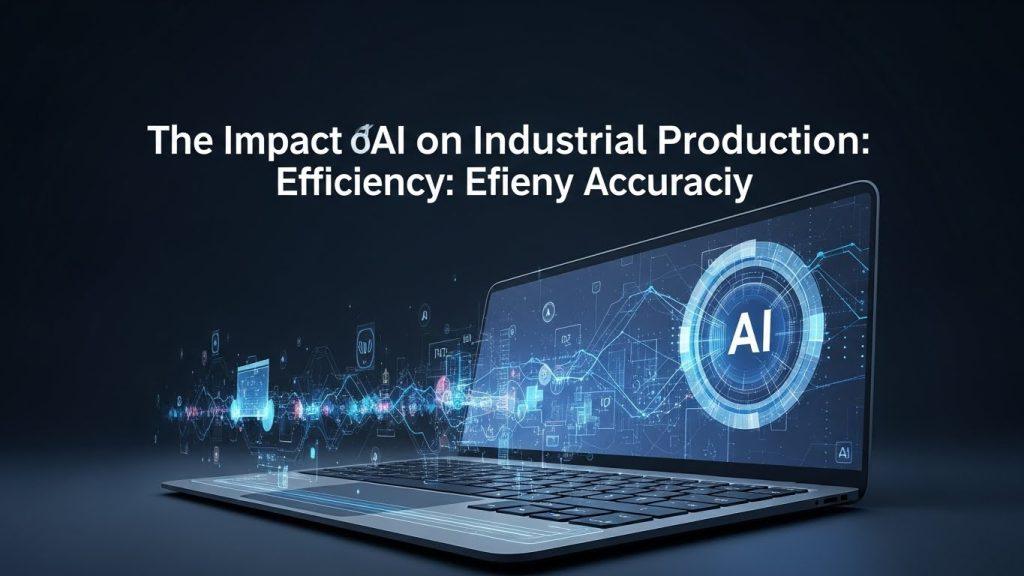
The Impact of AI on Industrial Production: Efficiency and Accuracy
In the rapidly evolving landscape of industrial production, the integration of Artificial Intelligence (AI) is reshaping how industries operate, bringing about unprecedented levels of efficiency and accuracy. As businesses strive to remain competitive in a global market, the adoption of AI technologies is becoming a crucial component of industrial strategy. This blog post delves into how AI is transforming industrial production, enhancing operational efficiency, and ensuring precision like never before.
The Role of AI in Industrial Production
Artificial Intelligence is fundamentally altering the ways in which industrial operations are conducted. By leveraging machine learning algorithms and data analytics, AI systems can process vast amounts of data to make informed decisions with minimal human intervention. This capability is particularly advantageous in industrial settings where precision and speed are paramount.
AI technologies are being employed in various stages of industrial production, from supply chain management to quality control, enabling companies to optimize their processes and reduce waste. For instance, AI-driven machinery can predict equipment failures before they occur, thereby reducing downtime and maintaining continuous production flows.
Enhancing Efficiency Through Automation
The automation of industrial processes through AI is a game-changer for manufacturers. By automating repetitive and time-consuming tasks, companies can significantly reduce labor costs and increase production speed. AI-powered robots and machines can operate 24/7 without fatigue, ensuring a consistent and reliable output.
Furthermore, AI enables the creation of smart factories where interconnected systems communicate seamlessly. This interconnectivity allows for real-time monitoring and adjustments, leading to optimized resource allocation and energy efficiency. As a result, manufacturers can achieve higher throughput with reduced resource consumption.
Precision and Accuracy in Quality Control

Quality control is a critical aspect of industrial production, and AI is revolutionizing this domain by offering unparalleled levels of precision and accuracy. Traditional quality control methods often rely on human inspection, which can be prone to errors and inconsistencies. In contrast, AI-powered systems use computer vision and machine learning to detect defects and anomalies with high precision.
For example, in the automotive industry, AI applications can analyze images of components to detect minute defects that might be overlooked by human inspectors. This ensures that only products meeting the highest standards reach the market, thereby enhancing customer satisfaction and brand reputation.
Predictive Maintenance and Reduced Downtime
One of the most significant benefits of AI in industrial production is its ability to facilitate predictive maintenance. By analyzing data from sensors and IoT devices, AI systems can predict when machinery is likely to fail and schedule maintenance activities proactively. This approach minimizes unexpected breakdowns and the associated costs of unplanned downtime.
Industries such as manufacturing and energy production have greatly benefited from predictive maintenance strategies. By keeping machines running smoothly, companies can maximize their operational time and reduce maintenance costs, leading to a more efficient production environment.
Supply Chain Optimization
AI extends its impact beyond the factory floor, playing a crucial role in supply chain management. By analyzing market trends, consumer behavior, and logistics data, AI systems can optimize supply chain operations and improve demand forecasting. This enables companies to maintain optimal inventory levels, reducing storage costs and minimizing the risk of stockouts or overproduction.
Moreover, AI facilitates dynamic pricing strategies, allowing businesses to adjust prices in real-time based on demand fluctuations and competitor actions. This agility in pricing helps companies maximize their profit margins while remaining competitive in the market.
Challenges and Considerations
While the integration of AI in industrial production offers numerous benefits, it also presents challenges that companies must address. One of the primary concerns is the need for a skilled workforce capable of managing and maintaining AI systems. As AI continues to evolve, the demand for professionals with expertise in AI and data analytics is on the rise.
Additionally, companies must consider the ethical implications of AI deployment. Issues such as data privacy, algorithmic bias, and the impact on employment should be carefully evaluated to ensure responsible and sustainable AI adoption.
Takeaways
The impact of AI on industrial production is profound, driving significant improvements in efficiency and accuracy across various sectors. By embracing AI technologies, companies can enhance their operational capabilities, reduce costs, and deliver superior products to the market. As AI continues to advance, its role in industrial production will undoubtedly expand, shaping the future of manufacturing and setting new standards for excellence.
For industries seeking to thrive in an increasingly competitive landscape, the integration of AI is no longer optional but essential. By leveraging AI’s potential, businesses can unlock new opportunities and achieve sustainable growth, ensuring their place in the future of industrial production.
The Future of AI in Industrial Production
As we look to the future, the role of AI in industrial production is expected to grow even more integral. Emerging technologies such as 5G and the Internet of Things (IoT) will further enhance AI’s capabilities, enabling more sophisticated and interconnected industrial systems. The convergence of these technologies will pave the way for new innovations and applications that we can only begin to imagine.
One area of tremendous potential is the development of autonomous systems. AI-driven autonomous vehicles and drones are set to revolutionize logistics and material handling within industrial settings. These systems can efficiently transport raw materials and finished products across sprawling industrial complexes, reducing the need for human intervention and increasing overall operational efficiency.
Moreover, the integration of AI with advanced robotics is likely to redefine manufacturing processes. Robotic systems equipped with AI can perform complex tasks with high precision and adaptability, enabling mass customization and the production of intricate components that were previously challenging or impossible to manufacture.
AI and Sustainable Industrial Practices
Another significant aspect of AI’s impact on industrial production is its potential to drive sustainability. As companies become more aware of their environmental footprint, AI provides tools to optimize resource usage and minimize waste. By analyzing energy consumption patterns, AI can suggest energy-saving measures and promote the use of renewable energy sources.
Additionally, AI can monitor and reduce emissions by optimizing production processes to minimize waste and improve efficiency. This not only helps companies comply with environmental regulations but also enhances their reputation as responsible corporate citizens.
The transition to a circular economy, where products are designed for reuse and recycling, is also facilitated by AI. By tracking materials and components throughout their lifecycle, AI can support closed-loop manufacturing processes and contribute to a more sustainable industrial ecosystem.
Empowering Workforce and Innovation
While there are concerns about AI’s impact on employment, it is important to recognize the potential for AI to empower the workforce and drive innovation. AI can handle repetitive tasks, freeing up human workers to focus on higher-level functions such as creative problem-solving, strategic planning, and innovation development.
Companies that invest in upskilling their workforce to work alongside AI systems are likely to see a significant boost in productivity and innovation. By fostering a culture of continuous learning and adaptation, organizations can harness the full potential of AI and create a workforce that is agile and capable of thriving in an AI-driven world.
Conclusion: Embracing the AI-Driven Industrial Revolution
In conclusion, the impact of AI on industrial production is profound and far-reaching, offering transformative benefits in terms of efficiency, accuracy, and sustainability. As industries continue to evolve, the adoption of AI technologies will become increasingly critical for maintaining competitive advantage and achieving growth.
By embracing AI, companies can unlock new levels of operational excellence and open the door to innovative possibilities. The key to success lies in strategic implementation, ethical considerations, and investment in human capital to ensure that both technology and people work in harmony.
As we stand on the brink of this AI-driven industrial revolution, the future holds immense promise. By leveraging AI’s capabilities, industries can create a more efficient, accurate, and sustainable production landscape, securing their place in the future of manufacturing and beyond. For more insights on the future of AI in industries, consider exploring resources like the Forbes analysis on AI in manufacturing and supply chains.
AI in Customization and Personalization
One of the significant advantages of AI in industrial production is its ability to facilitate customization and personalization at scale. Traditional manufacturing processes often struggle with the flexibility required to customize products for individual consumer preferences without incurring high costs. However, AI changes the game by enabling manufacturers to produce customized products efficiently.
AI systems can analyze customer data and preferences to design products that meet specific needs and desires. This level of personalization is particularly valuable in industries such as automotive and consumer electronics, where customer preferences can vary widely. By utilizing AI, companies can offer tailored products without sacrificing economies of scale.
Moreover, AI-powered design tools allow for rapid prototyping and iteration, enabling manufacturers to quickly adapt to changing market demands and trends. This agility ensures that companies remain competitive and responsive to consumer needs, which is a key factor in today’s fast-paced market environment.
Overcoming Implementation Barriers
While the benefits of AI in industrial production are clear, implementing AI solutions is not without its challenges. Many companies face barriers such as high initial costs, integration with legacy systems, and a lack of skilled personnel. Overcoming these challenges requires strategic planning and investment.
To begin with, companies should conduct a thorough assessment of their current operations and identify areas where AI can deliver the most value. This targeted approach allows for a more manageable and cost-effective implementation process. Additionally, partnerships with technology providers can help companies access the expertise and resources needed to deploy AI solutions effectively.
Investing in workforce development is equally important. By providing training programs and encouraging a culture of innovation, companies can equip their employees with the skills needed to work alongside AI technologies. This not only enhances the workforce’s capabilities but also fosters a collaborative environment where technology and human ingenuity can thrive.
The Ethical Dimension of AI in Industry
As AI becomes more prevalent in industrial production, ethical considerations must be at the forefront of implementation strategies. Ensuring data privacy and security is paramount, particularly as AI systems rely on vast amounts of data to function effectively. Companies must adopt robust data governance frameworks to protect sensitive information and build trust with stakeholders.
Moreover, addressing algorithmic bias is crucial to ensure fair and equitable outcomes. AI systems must be designed and trained with diverse datasets to avoid reinforcing existing biases in decision-making processes. Transparency and accountability in AI operations are essential to gaining public trust and ensuring that AI technologies are used responsibly.
Conclusion: Navigating the AI-Driven Future
As we navigate the AI-driven future of industrial production, the opportunities for innovation and growth are immense. By harnessing the power of AI, industries can achieve unprecedented levels of efficiency, accuracy, and customization, leading to more sustainable and competitive operations.
The journey toward AI integration is not without its challenges, but with strategic planning, investment in skills development, and a commitment to ethical practices, companies can successfully transition into this new era. As industries continue to evolve, the role of AI will only become more central, shaping the future of production and redefining the possibilities of what can be achieved.
For those looking to explore more about the transformative impact of AI in industry, resources such as the World Economic Forum’s Future of Jobs Report offer valuable insights into how AI is reshaping the workforce and industrial practices globally.
About the Author