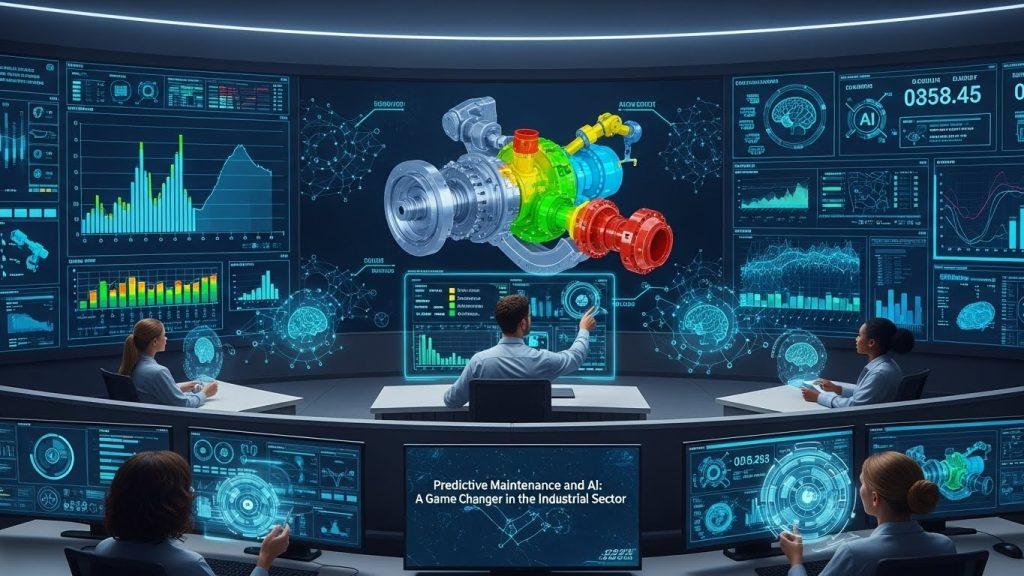
Predictive Maintenance and AI: A Game Changer in the Industrial Sector
In the rapidly evolving world of the industrial sector, the integration of artificial intelligence (AI) with predictive maintenance has emerged as a revolutionary approach to equipment and machinery upkeep. This seamless blend of cutting-edge technology and strategic foresight is proving to be a game changer, dramatically enhancing operational efficiency, reducing downtime, and cutting costs. In this comprehensive exploration, we delve into the ins and outs of predictive maintenance powered by AI, assessing its impact, benefits, and future potential.
Understanding Predictive Maintenance
Predictive maintenance refers to the practice of forecasting when equipment failure might occur, thereby allowing for timely maintenance to avoid unexpected downtime. Unlike traditional maintenance strategies, which are either time-based (preventive maintenance) or reactive (fixing equipment after a failure), predictive maintenance leverages data to predict failures before they happen.
The core of predictive maintenance lies in condition monitoring. This involves collecting data from various sensors installed on equipment to monitor parameters like vibration, temperature, pressure, and flow. By analyzing these data points over time, businesses can identify patterns indicating potential equipment issues.
The Role of AI in Predictive Maintenance
Artificial intelligence plays a pivotal role in enhancing predictive maintenance systems. AI algorithms process vast amounts of data collected from sensors to identify subtle patterns and anomalies that might escape human analysis. Machine learning, a subset of AI, is particularly useful in this context as it enables systems to learn from data continuously, improving accuracy over time.
One of the primary advantages of using AI in predictive maintenance is the ability to process and analyze data in real-time. This real-time analysis allows for immediate decision-making, minimizing the risk of equipment failure and optimizing maintenance schedules. Moreover, AI systems can be trained to recognize the specific operational characteristics of different machinery, enhancing the precision of predictions.
Benefits of AI-Powered Predictive Maintenance

The integration of AI into predictive maintenance offers multiple benefits that extend beyond mere cost savings. Some of the most significant advantages include:
- Reduced Downtime: By predicting failures before they occur, industries can schedule maintenance during non-peak hours, significantly reducing unplanned downtime.
- Cost Efficiency: Timely maintenance prevents severe equipment failures, reducing repair costs. Additionally, it extends the lifespan of machinery, maximizing return on investment.
- Enhanced Safety: Predictive maintenance minimizes the risk of catastrophic failures that can pose safety hazards, thereby protecting workers and assets.
- Increased Productivity: With machines operating at optimal efficiency, productivity levels can rise, leading to increased output and revenue.
Applications of Predictive Maintenance in the Industrial Sector
Predictive maintenance is applicable across various industries, each benefiting uniquely from AI integration. Here are some notable examples:
Manufacturing
In manufacturing, AI-driven predictive maintenance ensures the smooth operation of production lines. By predicting potential failures in assembly line equipment, manufacturers can avoid costly disruptions and maintain consistent product quality.
Oil and Gas
The oil and gas industry, known for its complex machinery and high-risk operations, benefits immensely from predictive maintenance. AI systems can monitor drilling equipment and pipelines, detecting early signs of wear and tear to prevent leaks or bursts.
Transportation
In transportation, particularly in sectors like aviation and railways, predictive maintenance ensures the reliability and safety of vehicles. AI helps in monitoring engine performance and other critical components, preventing delays and enhancing passenger safety.
Utilities
For utility companies, particularly those in the energy sector, predictive maintenance ensures the reliability of power plants and distribution networks. AI systems forecast equipment failures, preventing blackouts and optimizing energy distribution.
Challenges and Considerations
Despite its numerous benefits, implementing AI-powered predictive maintenance does come with challenges. One significant hurdle is the initial investment required for sensor installation and AI system integration. Additionally, companies must address data privacy and security concerns, as vast amounts of sensitive data are collected and analyzed.
Training and upskilling the workforce are also crucial. Employees must be equipped to interpret AI-driven insights and make informed decisions based on those insights. Furthermore, continuous monitoring and updating of AI models are essential to ensure they remain accurate and effective in evolving industrial environments.
The Future of Predictive Maintenance with AI
The future of predictive maintenance in the industrial sector holds immense promise. As AI technology continues to advance, predictive maintenance systems will become even more sophisticated, offering unparalleled accuracy and insights. The integration of IoT (Internet of Things) with AI will further enhance data collection and analysis, enabling more comprehensive condition monitoring.
Moreover, as industries increasingly adopt smart factories and Industry 4.0 principles, predictive maintenance will play a critical role in ensuring seamless and efficient operations. The ability to predict and prevent equipment failures will be a key differentiator for businesses aiming to remain competitive in a technology-driven landscape.
Takeaways
Predictive maintenance powered by AI is undeniably a game changer in the industrial sector. By enabling businesses to foresee and address equipment issues proactively, it enhances operational efficiency, reduces costs, and ensures safety. While challenges exist, the benefits far outweigh the drawbacks, making it an essential strategy for any forward-thinking industrial entity.
As we look to the future, the synergy between AI and predictive maintenance will undoubtedly continue to transform the industrial landscape, driving innovation and fostering sustainable growth. Embracing this technology is not just an option but a necessity for industries aiming to thrive in an increasingly competitive environment.
Case Studies: Success Stories of AI-Powered Predictive Maintenance
To fully appreciate the transformative potential of AI in predictive maintenance, it’s beneficial to examine some real-world success stories. These case studies highlight how different industries have leveraged this technology to achieve remarkable results.
General Electric (GE)
General Electric has been at the forefront of using AI for predictive maintenance in their power division. By deploying AI algorithms across their turbines, GE has successfully predicted potential failures before they occur. This proactive approach has not only reduced downtime but has also saved millions in maintenance costs annually.
Siemens
Siemens, a leader in industrial manufacturing, has implemented AI-powered predictive maintenance in their rail systems. Sensors installed on trains gather data that AI systems analyze to predict component failures. This initiative has enhanced service reliability, reduced operational costs, and improved passenger satisfaction.
Rolls-Royce
In the aviation sector, Rolls-Royce has harnessed the power of AI for predictive maintenance of jet engines. By monitoring engine performance data in real-time, they can predict maintenance needs accurately, minimizing flight disruptions and ensuring passenger safety.
Innovating Beyond Predictive Maintenance
While predictive maintenance is a pinnacle of AI application in the industrial sector, its integration opens doors to further innovations. For instance, AI-driven digital twins are increasingly being used to simulate and optimize manufacturing processes. By creating virtual replicas of physical systems, industries can experiment with various scenarios to optimize performance without actual risks.
Moreover, the implementation of AI in predictive maintenance is paving the way for prescriptive maintenance. Unlike predictive maintenance, which forecasts when maintenance is needed, prescriptive maintenance not only predicts issues but also recommends specific actions to address them. This capability can further streamline maintenance operations and improve decision-making processes.
Preparing for AI Integration in Predictive Maintenance
For organizations looking to adopt AI-powered predictive maintenance, preparation is key. Here are a few strategic steps to consider:
- Data Strategy: Develop a robust data strategy to ensure the accurate and secure collection, storage, and analysis of sensor data.
- Technology Infrastructure: Invest in the necessary technological infrastructure, including high-quality sensors and advanced AI software, to support predictive maintenance initiatives.
- Workforce Training: Upskill employees to work alongside AI systems, enabling them to interpret data insights and make informed decisions effectively.
- Collaboration with AI Experts: Partner with AI specialists to design and implement predictive maintenance systems tailored to specific industrial needs.
Conclusion: Embracing the Future
Predictive maintenance, augmented by AI, is not just an innovation; it’s a revolution in how industries approach equipment management. By transitioning from reactive to predictive strategies, businesses can significantly enhance their operational efficiency and competitive edge. The continued advancement of AI technology promises even greater improvements in predictive maintenance, offering industries unprecedented opportunities to optimize their operations and reduce costs.
As we move forward, the industrial sector must embrace AI-driven predictive maintenance not only as a tool for immediate benefits but as a long-term strategy for sustainable growth and innovation. By doing so, businesses will be well-positioned to navigate the challenges of the future and capitalize on the immense potential that AI technology has to offer.
Addressing Challenges in AI-Powered Predictive Maintenance
Despite the clear advantages, the path to implementing AI-driven predictive maintenance is not without its challenges. Organizations must navigate several hurdles to fully realize the benefits of this technology.
Data Quality and Availability
A critical challenge is ensuring the quality and availability of data. Predictive maintenance relies heavily on accurate and comprehensive data to deliver reliable forecasts. Incomplete or poor-quality data can lead to incorrect predictions, which may cause unnecessary maintenance or missed issues. To combat this, companies must invest in high-quality sensors and robust data management systems.
Integration with Existing Systems
Integrating AI-powered predictive maintenance systems with existing industrial infrastructure can be complex. Many legacy systems are not designed to handle the advanced analytics and data processing required by AI technologies. This may necessitate significant upgrades or replacements, which can be costly and time-consuming. Companies must plan for these integrations carefully to minimize disruptions.
Cost Considerations
The initial cost of implementing AI systems can be prohibitive for some companies, especially small and mid-sized enterprises. However, the long-term benefits in terms of cost savings, reduced downtime, and increased efficiency often justify the investment. Companies should conduct comprehensive cost-benefit analyses to understand the return on investment fully.
Cybersecurity Risks
With the increasing reliance on digital systems, cybersecurity becomes a paramount concern. Predictive maintenance systems can be vulnerable to cyber threats, which could lead to data breaches or operational disruptions. Companies must implement robust cybersecurity measures to protect their systems and data from potential attacks.
The Role of Government and Policy in Facilitating AI Adoption
Government policies can significantly influence the adoption of AI-powered predictive maintenance. Supportive policies and incentives can help mitigate the initial costs and risks associated with implementing these technologies. Governments can play a crucial role by:
- Providing Financial Incentives: Subsidies, tax breaks, and grants can reduce the financial burden on companies looking to implement AI systems.
- Encouraging Research and Development: Investing in R&D initiatives can foster innovation and accelerate the development of advanced predictive maintenance solutions.
- Establishing Standards and Regulations: Developing industry-wide standards can help ensure quality and consistency in AI applications across sectors.
- Facilitating Skill Development: Government-backed training programs can help build a skilled workforce capable of managing and utilizing AI technologies effectively.
Conclusion: The Road Ahead
The integration of AI into predictive maintenance is setting a new standard for efficiency and reliability in the industrial sector. While challenges exist, the potential benefits far outweigh the obstacles, making it a strategic imperative for forward-thinking organizations. As AI technology continues to evolve, its role in predictive maintenance will expand, offering even more sophisticated solutions and insights.
The road ahead will require collaboration between industries, technology providers, and policymakers to overcome challenges and maximize the potential of AI-driven predictive maintenance. By embracing this technology, industries can secure a competitive edge, enhance operational efficiency, and pave the way for a more sustainable future.
Ultimately, the journey towards AI-powered predictive maintenance is not just about adopting a new technology; it’s about transforming the way industries operate, making them more agile, resilient, and capable of meeting the demands of an ever-changing world.
About the Author