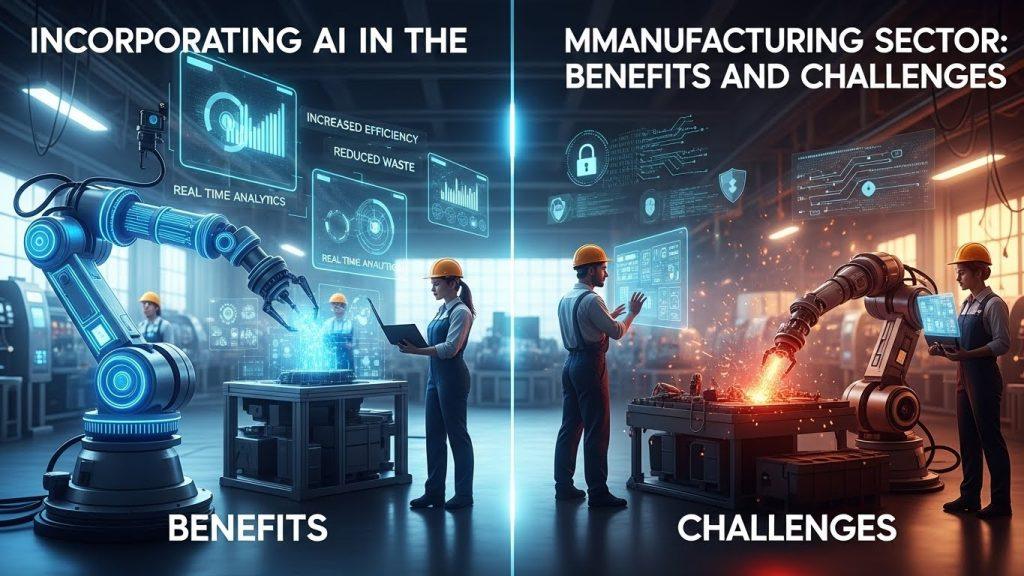
Incorporating AI in the Manufacturing Sector: Benefits and Challenges
The manufacturing sector has always been at the forefront of adopting new technologies to enhance productivity and efficiency. In recent years, Artificial Intelligence (AI) has emerged as a transformative force, offering unprecedented opportunities for innovation and optimization. As industries strive to remain competitive, incorporating AI in manufacturing processes has become a critical strategy. This article explores the benefits and challenges associated with integrating AI into the manufacturing sector, providing insights into its potential impact on the industry.
The Role of AI in Modern Manufacturing
AI technologies, including machine learning, robotics, and data analytics, are reshaping the manufacturing landscape. By leveraging AI, manufacturers can automate complex tasks, improve decision-making, and enhance product quality. AI-driven applications such as predictive maintenance, quality control, and supply chain optimization are becoming increasingly prevalent. According to a report by McKinsey, AI has the potential to increase productivity in manufacturing by up to 20%.
Benefits of AI in Manufacturing
1. Enhanced Productivity and Efficiency
AI tools can significantly improve manufacturing efficiency by automating repetitive tasks and optimizing production processes. For instance, AI-powered robotics can perform assembly line tasks with precision and speed, reducing the need for human intervention. This automation not only streamlines operations but also minimizes errors and increases output.
2. Predictive Maintenance

Predictive maintenance is one of the most compelling applications of AI in manufacturing. By analyzing data from sensors and machines, AI systems can predict equipment failures before they occur. This proactive approach reduces downtime, lowers maintenance costs, and extends the lifespan of machinery. A study by IBM indicates that predictive maintenance can reduce maintenance costs by up to 25%.
3. Improved Quality Control
AI technologies can enhance quality control by identifying defects and inconsistencies in real-time. Machine vision systems equipped with AI algorithms can inspect products with greater accuracy than human inspectors, ensuring that only high-quality products reach the market. This capability not only improves customer satisfaction but also reduces waste and rework.
4. Supply Chain Optimization
AI can optimize supply chain management by providing insights into demand forecasting, inventory management, and logistics. AI algorithms can analyze market trends, consumer behavior, and historical data to predict demand more accurately. This information enables manufacturers to adjust production schedules, manage inventory levels, and reduce lead times.
Challenges of AI Implementation in Manufacturing
1. High Initial Investment
While AI offers numerous benefits, the initial investment required for implementation can be substantial. The costs associated with acquiring AI technology, training personnel, and integrating systems can be prohibitive for small and medium-sized enterprises. However, the long-term benefits of increased efficiency and reduced operational costs often justify the investment.
2. Data Privacy and Security
The integration of AI in manufacturing involves the collection and analysis of vast amounts of data. This raises concerns about data privacy and security, as sensitive information could be vulnerable to cyberattacks. Manufacturers must implement robust security measures to protect their data and ensure compliance with regulations such as the General Data Protection Regulation (GDPR).
3. Workforce Displacement
The automation of tasks through AI may lead to workforce displacement, as machines take over roles traditionally performed by humans. While AI creates new job opportunities in areas such as system management and data analysis, it also requires a shift in workforce skills. Manufacturers must invest in retraining and upskilling their employees to adapt to the changing landscape.
4. Integration with Existing Systems
Integrating AI into existing manufacturing systems can be challenging, as legacy equipment may not be compatible with modern AI technologies. This requires careful planning and collaboration with technology providers to ensure seamless integration. Manufacturers must also consider the scalability of AI solutions to accommodate future growth and innovation.
Future Prospects of AI in Manufacturing
The future of AI in manufacturing is promising, with ongoing advancements in technology and increased adoption across industries. As AI continues to evolve, it will enable manufacturers to achieve higher levels of customization, flexibility, and efficiency. Emerging technologies such as the Internet of Things (IoT) and edge computing will further enhance AI capabilities, driving innovation and growth in the manufacturing sector.
Moreover, the collaboration between AI and human intelligence will play a crucial role in shaping the future of manufacturing. By leveraging the strengths of both, manufacturers can create agile and resilient operations that respond quickly to market changes.
Takeaways
Incorporating AI in the manufacturing sector presents a myriad of benefits, from enhanced productivity and predictive maintenance to improved quality control and supply chain optimization. However, challenges such as high initial investment, data security concerns, workforce displacement, and integration hurdles must be addressed to fully realize AI’s potential. As the industry continues to evolve, manufacturers that embrace AI will be well-positioned to thrive in an increasingly competitive global market. For more insights on the integration of AI in industries, refer to resources like the World Economic Forum.
Case Studies of AI Implementation in Manufacturing
1. Siemens’ Digital Twin Technology
Siemens has been at the forefront of integrating AI into its manufacturing processes through the use of digital twin technology. A digital twin is a virtual model of a physical product, process, or system that allows for real-time simulation and analysis. By using AI-driven digital twins, Siemens can optimize production processes, predict maintenance needs, and improve product quality. This technology has enabled Siemens to reduce production costs and accelerate time-to-market for new products.
2. General Electric’s Predictive Analytics
General Electric (GE) has leveraged AI for predictive analytics to enhance the efficiency of its manufacturing operations. By employing machine learning algorithms to analyze data from sensors embedded in equipment, GE can predict potential failures and optimize maintenance schedules. This proactive approach has led to significant reductions in downtime and maintenance costs, demonstrating the power of AI in industrial applications. For more details on GE’s approach, explore resources like GE Digital.
3. Tesla’s AI-Driven Automation
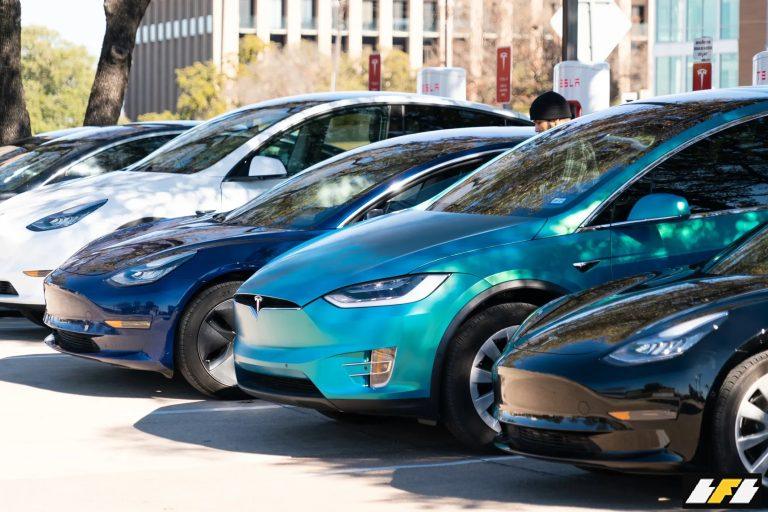
Tesla is renowned for its innovative use of AI in manufacturing, particularly in its Gigafactories. Tesla employs AI-driven automation to streamline production processes, reduce waste, and enhance the precision of assembly lines. This has enabled Tesla to achieve high production rates while maintaining quality standards. The company’s commitment to AI innovation has positioned it as a leader in the automotive industry, setting a benchmark for efficiency and sustainability.
Integrating AI with Emerging Technologies
AI’s potential in manufacturing is further amplified when integrated with other emerging technologies such as the Internet of Things (IoT), 5G connectivity, and blockchain. These technologies complement AI by providing a robust infrastructure for data collection, communication, and security.
The Role of IoT
The Internet of Things plays a pivotal role in AI-driven manufacturing by enabling the seamless connection of devices and systems. IoT devices equipped with sensors can collect and transmit data in real-time, providing AI systems with the information needed for accurate analysis and decision-making. This integration enhances the visibility and control manufacturers have over their operations, leading to improved efficiency and responsiveness.
5G Connectivity
5G technology offers high-speed, low-latency connectivity that facilitates the real-time exchange of data between AI systems and manufacturing equipment. This enables manufacturers to implement advanced AI applications that require rapid data processing, such as remote monitoring and control of production lines. The deployment of 5G networks is expected to accelerate the adoption of AI in manufacturing, driving further innovation and competitiveness.
Blockchain for Data Security
Blockchain technology addresses data security concerns in AI-driven manufacturing by providing a decentralized and tamper-proof ledger for recording transactions and data exchanges. This ensures the integrity and confidentiality of sensitive information, which is crucial for maintaining trust in AI applications. By integrating blockchain with AI, manufacturers can enhance data security and compliance, paving the way for broader adoption of AI technologies.
Preparing for an AI-Driven Future
As AI continues to transform the manufacturing sector, companies must prepare for an AI-driven future by adopting a strategic approach to implementation. Key considerations include:
- Developing a Clear AI Strategy: Manufacturers should define their AI objectives and identify areas where AI can deliver the most value. This involves assessing current capabilities, setting realistic goals, and creating a roadmap for AI adoption.
- Investing in Talent and Skills: To fully leverage AI, manufacturers need a workforce equipped with the necessary skills and knowledge. Investing in training and development programs can help employees adapt to new technologies and roles.
- Fostering a Culture of Innovation: Encouraging a culture of innovation and experimentation can drive AI adoption and growth. Manufacturers should create an environment that supports creativity and collaboration, enabling teams to explore new AI-driven solutions.
- Collaborating with Technology Partners: Partnering with technology providers and research institutions can provide manufacturers with access to cutting-edge AI technologies and expertise. Collaboration can accelerate AI implementation and enhance capabilities.
Takeaways
The integration of AI into the manufacturing sector offers transformative benefits, from increased efficiency and productivity to enhanced quality control and supply chain optimization. However, the journey to AI adoption is not without its challenges, including high initial costs, data security concerns, and workforce adaptation. By understanding these challenges and leveraging AI in conjunction with emerging technologies, manufacturers can position themselves for success in an increasingly competitive landscape. As AI continues to evolve, it will undoubtedly play a critical role in shaping the future of manufacturing, driving innovation, and enabling sustainable growth. For further reading on AI’s impact across industries, refer to resources like the Forbes Insights.
About the Author