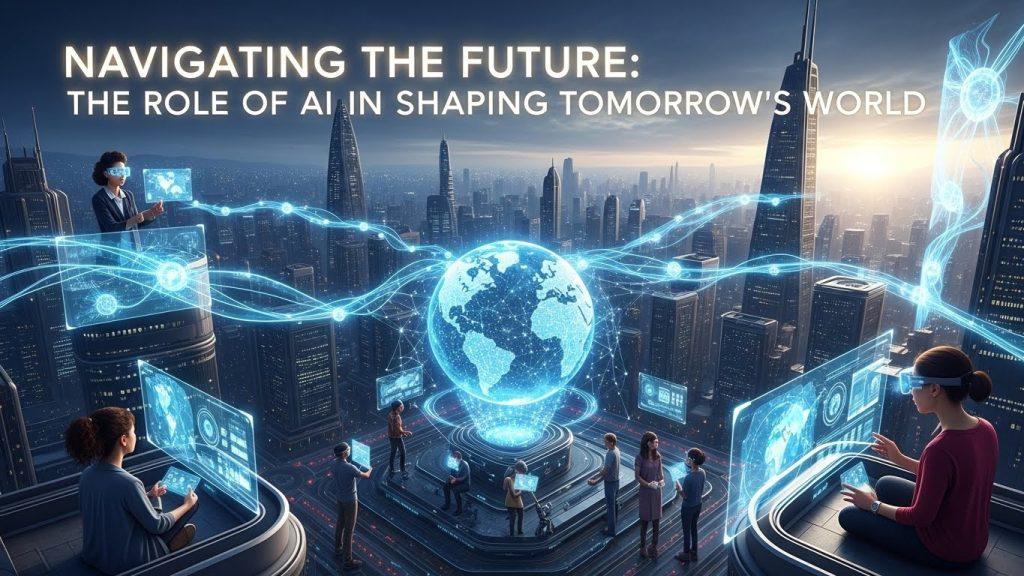
Navigating the Future: The Role of AI in Shaping Tomorrow’s World
In the rapidly evolving landscape of technology, artificial intelligence (AI) stands at the forefront, poised to reshape the fabric of our society. As we navigate the future, understanding the role of AI in shaping tomorrow’s world is crucial. This transformative technology promises to revolutionize industries, enhance our daily lives, and address complex global challenges. In this blog post, we delve deep into the multifaceted impact of AI and explore how it is set to influence the future.
The Evolution of Artificial Intelligence
To understand the future of AI, we must first look back at its evolution. From its inception in the mid-20th century, AI has come a long way. Early AI systems were limited by technological constraints, but today, the landscape has transformed dramatically. Advances in neural networks and machine learning algorithms have enabled AI to perform tasks that were once considered science fiction.
In recent years, AI has surpassed human capabilities in specific areas, such as image and speech recognition. The advent of deep learning and big data has propelled AI into new domains, making it an indispensable tool for businesses and researchers alike. The journey of AI is marked by breakthroughs that have paved the way for its integration into various sectors.
AI in Healthcare: A Revolution in Patient Care
One of the most promising applications of AI is in the healthcare industry. With the ability to analyze vast amounts of data quickly, AI is transforming patient care and medical research. From early disease detection to personalized treatment plans, AI is becoming a crucial ally for healthcare professionals.

For instance, AI algorithms can analyze medical imagery with remarkable accuracy, assisting radiologists in diagnosing diseases like cancer at an early stage. Moreover, AI-powered tools are aiding in drug discovery, significantly reducing the time and cost associated with bringing new drugs to market. As AI continues to advance, its potential to improve health outcomes and reduce healthcare costs is immense.
Transforming Industries: AI’s Economic Impact
AI’s influence extends beyond healthcare, with significant implications for various industries. In manufacturing, AI-driven automation is enhancing efficiency and productivity. Robots equipped with AI capabilities can perform repetitive tasks with precision, freeing up human workers for more complex responsibilities.
The financial sector is also witnessing a transformation, with AI being used for fraud detection, credit scoring, and algorithmic trading. AI’s ability to process and analyze large datasets at lightning speed allows financial institutions to make informed decisions and mitigate risks effectively.
Furthermore, AI is reshaping the retail industry by enhancing customer experiences. Personalized recommendations, chatbots, and virtual assistants are just a few examples of how AI is enhancing customer engagement and satisfaction.
Addressing Global Challenges with AI
As we look towards the future, AI holds the potential to address some of the most pressing global challenges. Climate change, poverty, and food security are complex issues that require innovative solutions. AI can play a pivotal role in developing strategies to combat these challenges.
For instance, AI is being utilized to optimize energy consumption and reduce carbon emissions. In agriculture, AI-powered systems are helping farmers optimize crop yields and manage resources efficiently. Moreover, AI is being used in disaster response efforts, enabling faster and more effective relief operations.
Ethical Considerations and Challenges
Despite the myriad benefits, the widespread adoption of AI raises ethical considerations. Issues such as data privacy, algorithmic bias, and job displacement are at the forefront of discussions surrounding AI. To ensure a future where AI benefits all, it is essential to address these challenges proactively.
Governments and organizations worldwide are working towards establishing ethical guidelines for AI development and deployment. Ensuring transparency and accountability in AI systems is crucial to building trust and minimizing potential risks.
The Future of AI: Opportunities and Possibilities
As AI continues to advance, the possibilities for its application are virtually limitless. The future will likely see AI technologies becoming more integrated into our daily lives, enhancing convenience and efficiency. From smart homes to autonomous vehicles, AI is poised to revolutionize the way we live and work.
Moreover, the development of ethical AI will be paramount in ensuring that these technologies are used responsibly and for the greater good. Collaboration between governments, industry leaders, and researchers will be crucial in steering AI development towards a future that benefits all of humanity.
Conclusion: Embracing the AI-Driven Future
As we navigate the future, the role of AI in shaping tomorrow’s world cannot be understated. Its transformative impact on industries, healthcare, and global challenges signifies a new era of innovation and progress. While ethical considerations must be addressed, the potential benefits of AI are immense.
By embracing AI responsibly and fostering collaboration across sectors, we can harness its power to create a better, more sustainable world. As we stand on the brink of an AI-driven future, the opportunities are boundless, and the journey promises to be an exciting one.
For more insights into the evolving world of AI, explore resources like the World Economic Forum and Nature, which provide in-depth analyses and updates on the latest developments in artificial intelligence.
As we delve deeper into the implications of AI, it is essential to consider the societal shifts that this technology will bring. AI’s integration into various facets of life will significantly impact education, employment, and the way we interact with technology.
AI and the Future of Education
Education is one sector where AI is poised to make a substantial impact. With the rise of personalized learning platforms, AI can tailor educational content to meet the unique needs of each student. By analyzing a student’s performance and learning style, AI systems can adjust the curriculum and provide targeted assistance, enhancing the overall learning experience.
Furthermore, AI can assist educators by automating administrative tasks, allowing them to focus more on teaching and student engagement. Virtual tutors and AI-driven educational tools are already in use, paving the way for a more inclusive and accessible education system.
Employment in the AI Era
The impact of AI on employment is a topic of considerable debate. While AI and automation may displace certain jobs, they also create new opportunities in emerging fields. The demand for AI specialists, data scientists, and machine learning engineers is on the rise, highlighting the need for reskilling and upskilling the workforce.
As routine tasks become automated, human workers will likely shift towards roles that require creativity, critical thinking, and emotional intelligence—skills that AI cannot replicate. Organizations and governments must invest in education and training programs to prepare the workforce for these changes and ensure a smooth transition.
Redefining Human-Technology Interaction
AI’s integration into our lives will redefine how we interact with technology. The development of natural language processing and conversational AI is making interactions with machines more intuitive and human-like. Voice-activated assistants and chatbots are becoming commonplace, transforming the way we communicate and access information.
Moreover, AI-driven technologies such as augmented reality (AR) and virtual reality (VR) are enhancing our interaction with digital environments. These technologies have applications in entertainment, training, and remote collaboration, providing immersive experiences that bridge the gap between the digital and physical worlds.
AI Governance: Shaping Policies for the Future
The rapid advancement of AI necessitates robust governance frameworks to address regulatory and ethical concerns. Policymakers must balance innovation with safeguards to protect individual rights and societal values. This includes establishing standards for data usage, ensuring algorithmic transparency, and promoting fairness in AI systems.
International cooperation will be critical in developing comprehensive AI governance models. Organizations like the Organisation for Economic Co-operation and Development (OECD) are working towards creating policy guidelines that encourage responsible AI development and deployment. As AI continues to evolve, adaptive governance strategies will be essential in navigating the complexities of this dynamic field.
The Road Ahead: Challenges and Opportunities
As we look to the future, AI presents both challenges and opportunities. The key to harnessing AI’s potential lies in our ability to address its challenges while maximizing its benefits. This includes investing in research and development, fostering innovation, and ensuring that AI technologies are developed with ethical considerations in mind.
By focusing on transparency, accountability, and inclusivity, we can create a future where AI serves as a force for good, driving progress and improving quality of life. The journey towards an AI-driven world is one of exploration, discovery, and collaboration.
In conclusion, the role of AI in shaping tomorrow’s world is profound and transformative. As we navigate this uncharted territory, it is imperative to embrace AI’s potential with a forward-thinking mindset. By doing so, we can unlock new possibilities, overcome global challenges, and create a more equitable and sustainable future for all.
About the Author