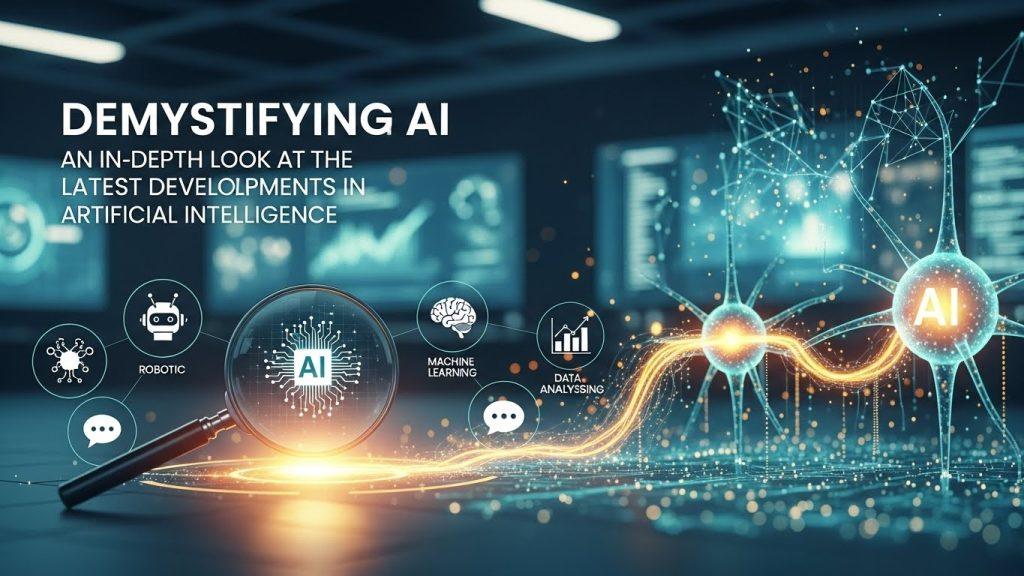
Demystifying AI: An In-Depth Look at the Latest Developments in Artificial Intelligence
The realm of artificial intelligence (AI) is rapidly evolving, transforming the way we interact with technology and reshaping industries across the globe. As AI becomes more integrated into our daily lives, understanding its developments and implications is crucial. In this article, we delve into the latest advancements in AI, exploring its applications, challenges, and future prospects.
The Evolution of Artificial Intelligence
Artificial intelligence has come a long way since its conceptual inception in the mid-20th century. From simple rule-based systems to sophisticated machine learning algorithms, AI technologies have dramatically evolved. The history of AI illustrates a journey from theoretical frameworks to practical applications that have revolutionized numerous sectors.
Recent Breakthroughs in AI
The past decade has witnessed significant breakthroughs in AI, driven by advancements in computational power, data availability, and algorithmic improvements. Key areas of progress include:
- Deep Learning: Deep learning, a subset of machine learning, utilizes neural networks with many layers to analyze complex patterns in data. This technology has been pivotal in enhancing image and speech recognition systems.
- Natural Language Processing (NLP): NLP has made tremendous strides, enabling machines to understand and generate human language with greater accuracy. Applications range from virtual assistants to automated translation services.
- Reinforcement Learning: This technique allows AI systems to learn by trial and error, optimizing their actions based on feedback from the environment. It’s widely used in robotics and game playing, exemplified by AI defeating human champions in Go and poker.
- Generative Adversarial Networks (GANs): GANs are employed to generate realistic images, videos, and audio, contributing to advancements in creative industries and deepfake technology.
AI in Industry: Transformative Applications
AI’s impact is profound across various sectors, revolutionizing how businesses operate and deliver value. Here are some notable applications:
Healthcare

In healthcare, AI is enhancing diagnostic accuracy and personalizing treatment plans. Machine learning algorithms analyze medical images with high precision, aiding radiologists in detecting anomalies. Additionally, AI-driven predictive analytics improve patient outcomes by identifying at-risk individuals early.
Finance
The financial industry leverages AI for fraud detection, risk management, and algorithmic trading. Machine learning models scrutinize vast datasets to uncover fraudulent activities and optimize investment strategies, helping financial institutions maintain security and profitability.
Manufacturing
AI optimizes manufacturing processes through predictive maintenance and quality control, reducing downtime and improving product quality. Robotics powered by AI enhance efficiency on production lines, enabling manufacturers to meet increasing demands with precision.
Retail
AI transforms the retail landscape by enhancing customer experience through personalized recommendations and chatbots. Retailers utilize AI to analyze consumer behavior, tailoring marketing strategies and inventory management to meet customer needs effectively.
Challenges and Ethical Considerations
Despite its potential, AI presents several challenges that need addressing. Key concerns include:
Bias and Fairness
AI systems can inherit biases present in training data, leading to unfair outcomes in critical areas like hiring and law enforcement. Ensuring fairness requires rigorous testing and diverse datasets to mitigate bias, as emphasized in recent discussions on AI ethics.
Privacy and Security
AI’s reliance on vast data raises privacy and security concerns. Striking a balance between data utility and privacy is essential, necessitating robust data protection frameworks and secure AI deployment practices.
Autonomy and Accountability
As AI systems gain autonomy, questions about accountability arise. Determining responsibility in cases of AI-driven errors or accidents is complex, requiring legal frameworks to address liability and transparency issues.
The Future of AI: Opportunities and Speculations
Looking ahead, AI holds immense promise in advancing technology and society. Future possibilities include:
AI and Human Augmentation
AI has the potential to augment human capabilities, enhancing cognitive and physical abilities. From exoskeletons aiding mobility to brain-computer interfaces improving cognitive functions, AI-driven human augmentation is a burgeoning field.
AI in Climate Change Mitigation
AI can play a crucial role in addressing climate change by optimizing energy consumption, predicting natural disasters, and developing sustainable solutions. Innovations in AI for climate initiatives are pivotal in creating a sustainable future.
General AI
General AI, capable of performing any intellectual task a human can, remains a long-term goal. While current AI systems are specialized, ongoing research aims to bridge the gap towards more versatile and intelligent systems.
Takeaways
Artificial intelligence continues to evolve, offering transformative potential across industries. As we navigate its complexities, understanding the latest developments and addressing associated challenges is crucial. By embracing AI responsibly and ethically, we can harness its power to drive innovation and improve the quality of life globally. The journey of AI is just beginning, and its future holds endless possibilities.
AI and the Workforce: Navigating Change
The integration of AI into various industries raises important questions about its impact on the workforce. As AI automates routine tasks, the nature of work is shifting, necessitating a reevaluation of skills and roles. While some fear job displacement, AI also creates new opportunities for innovation and growth.
Reskilling and Upskilling
To adapt to AI-driven changes, reskilling and upskilling initiatives are crucial. Workers need to develop skills that complement AI, such as data analysis, critical thinking, and creativity. Organizations play a vital role in creating training programs that empower employees to thrive in an AI-augmented environment.
Collaboration Between Humans and AI
Rather than replacing human workers, AI can augment productivity by handling repetitive tasks, allowing humans to focus on complex problem-solving and creative endeavors. This collaborative approach can lead to more innovative outcomes and increased job satisfaction.
Policy and Regulation
Governments and policymakers must address the socioeconomic implications of AI on employment. Developing policies that support workforce transition, such as unemployment benefits and retraining programs, is essential to ensure an equitable adaptation to technological change.
AI in Education: Transforming Learning Experiences
AI is revolutionizing education by personalizing learning experiences and enhancing educational accessibility. Intelligent tutoring systems, driven by AI, tailor lessons to individual student needs, optimizing learning outcomes. Furthermore, AI-powered tools assist educators in administrative tasks, allowing more time for student engagement.
Personalized Learning
AI enables personalized learning paths, adapting to students’ abilities and learning styles. By analyzing performance data, AI systems identify areas for improvement, providing customized resources and support.
Educational Accessibility
AI breaks down barriers to education by offering remote learning solutions and translating materials into multiple languages. This expanded accessibility ensures that more learners can benefit from quality education regardless of geographical or linguistic constraints.
AI and Gamification
Incorporating AI into educational games enhances engagement and motivation. By tailoring challenges to individual skill levels, AI-driven gamification promotes active learning, making education enjoyable and effective.
Healthcare Innovations: AI’s Role in Medical Advancements
AI’s influence on healthcare extends beyond diagnostics and treatment personalization. It plays a pivotal role in accelerating medical research, drug discovery, and patient management, promising improved healthcare outcomes.
Accelerating Drug Discovery
AI expedites drug discovery by rapidly analyzing vast datasets to identify potential compounds and predict their efficacy. This accelerates the development of new treatments, addressing urgent medical needs.
Remote Patient Monitoring
AI enhances remote patient monitoring through wearable devices and health apps, providing real-time health data to clinicians. This continuous monitoring enables early intervention and proactive healthcare management.
AI-Assisted Surgery
AI-assisted robotic surgery enhances precision and minimizes invasiveness, leading to improved surgical outcomes and faster recovery times. Surgeons can leverage AI to plan procedures and execute tasks with unparalleled accuracy.
Conclusion: Embracing the AI Revolution
As AI continues to advance, its transformative potential becomes increasingly apparent. Embracing AI responsibly and ethically will be key to maximizing its benefits while minimizing risks. By fostering collaboration between humans and machines, investing in education and reskilling, and ensuring equitable access to AI advancements, we can navigate the AI revolution successfully.
The journey of AI is a shared endeavor, requiring input from technologists, policymakers, and society at large. By working together, we can shape a future where AI enhances human capabilities, drives innovation, and contributes to a more equitable and sustainable world. As we stand on the brink of this technological frontier, the possibilities are boundless, and the future is ours to create.
AI and Ethics: Navigating Moral Complexities
As AI systems become more autonomous and impactful, ethical considerations are paramount. Ensuring that AI technologies align with human values and societal norms is crucial to their responsible deployment.
Developing Ethical Frameworks
Organizations and governments are increasingly focused on developing ethical frameworks for AI. These guidelines aim to ensure transparency, accountability, and fairness in AI systems, addressing issues such as bias, privacy, and decision-making processes.
AI and Decision-Making
AI’s role in decision-making processes, especially in critical areas like healthcare and criminal justice, raises ethical questions about autonomy and control. It is essential to maintain human oversight and ensure that AI complements rather than replaces human judgment.
Transparency and Explainability
The complexity of AI models, particularly deep learning algorithms, often makes them “black boxes” that are difficult to interpret. Enhancing transparency and explainability is vital to building trust in AI systems and ensuring they can be audited and understood by humans.
Global Collaboration: AI Across Borders
AI development benefits from global collaboration, as countries pool resources and expertise to advance the technology. International cooperation is crucial for setting standards, sharing research, and addressing cross-border challenges such as data privacy and security.
International AI Initiatives
Several international initiatives and partnerships have been established to foster collaboration in AI research and development. These initiatives aim to harmonize regulations, promote best practices, and ensure that AI benefits are distributed globally.
Bridging the Digital Divide
Efforts to bridge the digital divide are essential to ensure that AI advancements are accessible to all countries, regardless of their economic status. Promoting inclusive AI development can help level the playing field and enable emerging economies to benefit from technological progress.
Standardizing AI Protocols
Establishing global standards for AI protocols and practices can facilitate interoperability, enhance security, and reduce risks associated with AI deployment. Collaborative efforts can lead to consistent guidelines that promote safe and ethical AI use worldwide.
AI and Sustainability: Building a Greener Future
AI’s potential to address environmental challenges is increasingly recognized, offering innovative solutions for sustainability. From optimizing energy consumption to supporting conservation efforts, AI can contribute significantly to a greener future.
Energy Efficiency and Smart Grids
AI optimizes energy consumption by managing smart grids and predicting energy demand. By balancing supply and demand more effectively, AI helps reduce waste and improve the efficiency of renewable energy sources.
Environmental Monitoring and Conservation
AI technologies, such as remote sensing and data analytics, are employed in environmental monitoring to track changes in ecosystems and wildlife populations. These tools are crucial for conservation efforts, enabling timely interventions to protect biodiversity.
Reducing Waste and Pollution
AI-driven solutions identify inefficiencies in industrial processes, helping reduce waste and minimize pollution. By analyzing production data, AI can suggest process improvements that lead to more sustainable practices and reduced environmental impact.
Final Thoughts: The Path Forward
The trajectory of artificial intelligence is both exciting and complex, offering transformative potential while posing significant challenges. As AI continues to evolve, it is imperative that we approach its development with foresight, responsibility, and a commitment to ethical principles.
By fostering collaboration, promoting transparency, and ensuring inclusivity, we can harness AI’s potential to address global challenges and improve the human condition. As we stand at the forefront of this technological era, the choices we make today will shape the future of AI and its role in society.
The path forward requires a concerted effort from all stakeholders, including technologists, policymakers, educators, and the public. Together, we can navigate the complexities of AI and unlock its potential to create a brighter, more equitable future for all.
About the Author